In the contemporary landscape of global infrastructure governance, the convergence of cybersecurity, regulatory compliance, and geopolitical stability has transformed critical systems into high-value strategic assets. Infrastructure is no longer a passive substrate supporting economic activity; rather, it has become an active locus of risk, sovereignty, and trust. This transformation is driven by increasing digitization, interconnectivity of industrial control systems, and the persistent evolution of asymmetric threats targeting both public and private sectors.
From an epistemological standpoint, traditional compliance frameworks have demonstrated structural limitations. They often rely on static audit cycles, fragmented standards, and reactive control mechanisms that fail to address dynamic threat environments. Consequently, a paradox emerges: organizations achieve compliance certification yet remain operationally insecure.
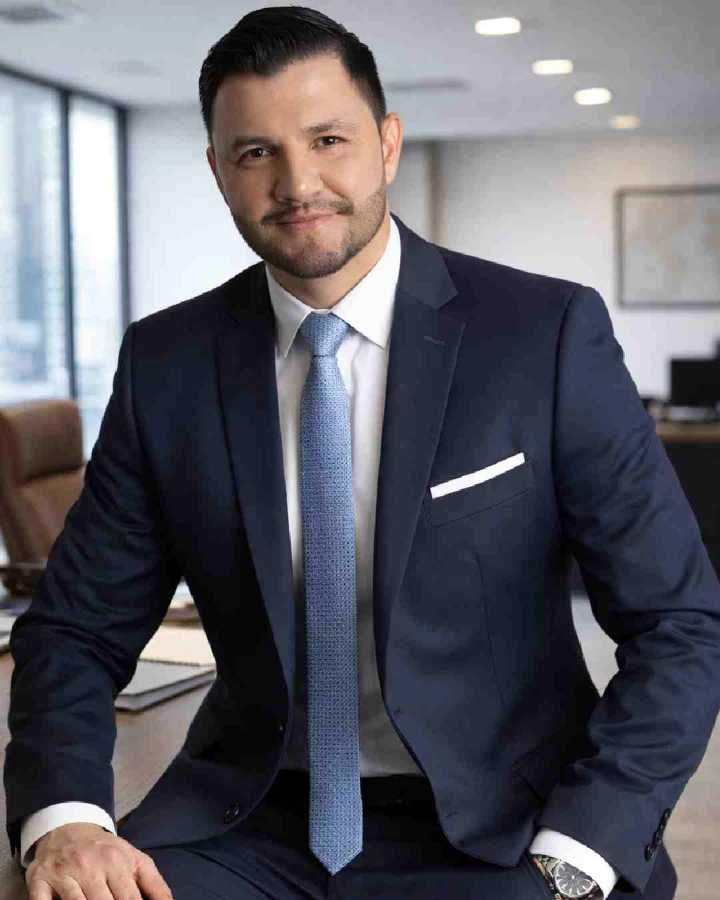
This interview with Douglas Rivero explores a systemic alternative—one that integrates Zero Trust Architecture, real-time auditability, and cryptographic validation into a unified governance model. The discussion situates infrastructure security not merely as a technical discipline but as a foundational condition for institutional legitimacy and market participation.
Douglas Rivero
CEO (Chief Executive Officer)
Technical Interview
1. What is the primary structural failure you observe in current infrastructure security models?
Douglas Rivero: The most critical failure lies in the illusion of compliance as security. Organizations invest heavily in certifications, yet these frameworks are inherently retrospective. They validate past conditions, not present realities. This creates a temporal vulnerability gap. In high-risk sectors such as energy or telecommunications, this gap can translate into systemic exposure within hours. The solution is continuous validation—real-time monitoring integrated with predictive analytics to detect anomalies before they escalate.
2. Why are traditional compliance frameworks insufficient in today’s threat landscape?
Douglas Rivero: Traditional frameworks operate under deterministic assumptions—they assume stable environments and predictable threats. However, modern attack vectors are adaptive, leveraging AI and exploiting interdependencies between systems. Alarmingly, over 60% of breaches occur in systems that were recently certified. This indicates a fundamental misalignment. Organizations must transition toward adaptive compliance models that integrate Zero Trust principles and continuous authentication protocols.
3. How does Zero Trust Architecture redefine infrastructure security?
Douglas Rivero: Zero Trust eliminates implicit trust within network boundaries. Every access request is continuously verified based on identity, context, and behavior. This is particularly critical for SCADA and ICS environments, where lateral movement by attackers can cause catastrophic disruption. Implementing Zero Trust reduces attack surfaces significantly, but it must be coupled with identity orchestration and behavioral analytics to be effective.
4. What role does blockchain play in infrastructure governance?
Douglas Rivero: Blockchain introduces an immutable layer of trust. It enables verifiable audit trails that cannot be altered retroactively. This is crucial for regulatory compliance, forensic analysis, and contractual enforcement. In sectors vulnerable to corruption or data manipulation, blockchain ensures transparency and accountability. However, its implementation must be strategic—focused on critical data points rather than full system integration to maintain efficiency.
5. What are the most alarming risks currently underestimated by organizations?
Douglas Rivero: The most underestimated risk is systemic interdependence. Organizations often secure individual components but ignore the interconnected nature of infrastructure. A vulnerability in a third-party vendor can cascade across entire networks. Additionally, identity compromise remains a dominant threat vector—over 80% of breaches involve credential misuse. Addressing this requires robust identity governance and multi-factor authentication across all access points.
6. How can companies transition from reactive to proactive security models?
Douglas Rivero: The transition requires a paradigm shift from perimeter-based defense to data-centric security. Organizations must implement continuous monitoring, integrate AI-driven threat detection, and establish real-time compliance validation mechanisms. Moreover, executive leadership must recognize security as a strategic investment rather than a cost center. Without this cultural shift, technical solutions alone will not suffice.
7. What practical steps should organizations take immediately to reduce risk?
Douglas Rivero: First, conduct a comprehensive risk assessment focused on interdependencies and identity management. Second, implement Zero Trust Architecture incrementally, starting with critical systems. Third, deploy real-time monitoring tools with predictive capabilities. Finally, establish a governance framework that aligns technical controls with regulatory requirements. These steps can reduce exposure significantly within a short timeframe.
Invitation to Engage
Organizations operating in high-risk or regulated environments cannot afford to rely on outdated security paradigms. If your company seeks to enhance resilience, ensure compliance, and build verifiable trust in its infrastructure, now is the time to act.
Contact us today to request a tailored assessment and receive a strategic quotation aligned with your operational and regulatory needs.
References
- Behl, A., & Behl, K. (2020). Cybersecurity and cyberwar: What everyone needs to know. Oxford University Press.
- Kindervag, J. (2010). No more chewy centers: Introducing the Zero Trust Model of information security. Forrester Research.
- NIST. (2020). Zero Trust Architecture (SP 800-207). National Institute of Standards and Technology.
- Tapscott, D., & Tapscott, A. (2016). Blockchain revolution: How the technology behind bitcoin is changing money, business, and the world. Penguin.
- World Economic Forum. (2023). Global Cybersecurity Outlook.